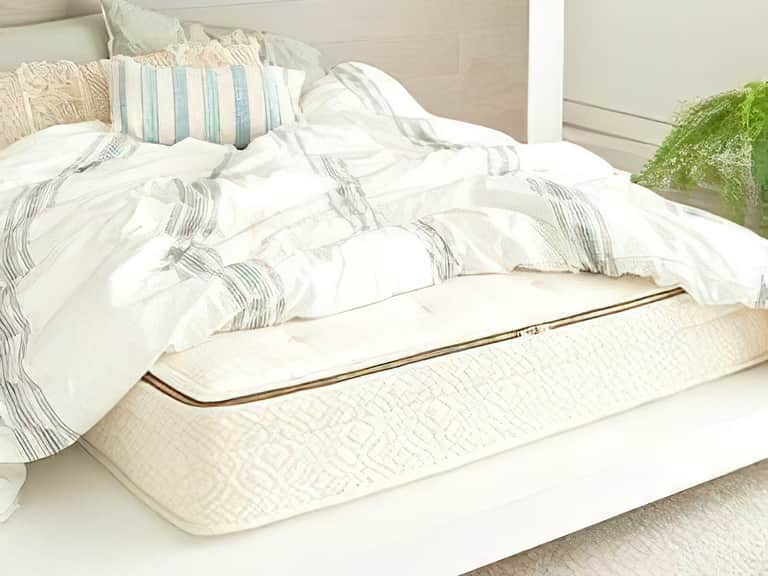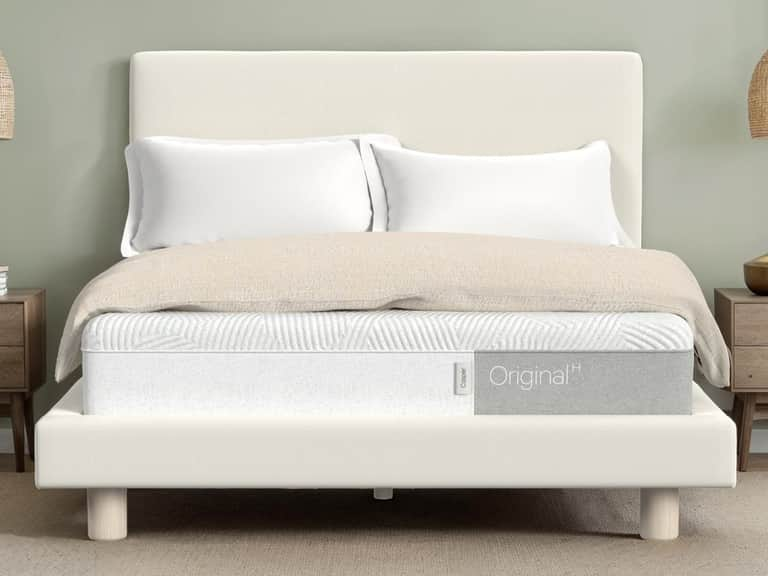
Natural Latex Organic Mattresses
How Latex Core Thickness Shapes Bed Support
A mattress is a small landscape of layers: each responds to weight, movement and warmth in a different way. In a latex bed, the thickness of the core helps determine how much material lies between the sleeper and the foundation—but thickness alone cannot tell you whether a mattress will feel firm, soft or supportive.
Published 22 November 2026
Latex has a distinctive spring to it. Press a hand into the surface and it yields, then rises back; lie down and the material can cushion the body while resisting the deeper compression that might bring a sleeper into contact with the bed base. That response makes natural latex a compelling option for people comparing organic mattresses. Yet the number of inches in a core is only one clue in a more complex design.
Core thickness can influence a bed’s feel, available cushioning and compatibility with different bodies and foundations. The result also depends on firmness, the number and arrangement of layers, the sleeper’s weight and preferred position, and the support provided by the bed frame. A thicker latex core is not automatically firmer or more supportive. Understanding how these factors work together makes it easier to compare specifications without mistaking a single measurement for a complete verdict.
What is a latex core?
The core is the principal supporting section of a mattress. In an all-latex design, it may be one substantial slab or several layers stacked together. In a hybrid, latex is combined with another support system, often springs. The layers above the core—such as cotton, wool or additional latex—also affect the way the bed feels at first contact.
Natural latex is made from rubber-tree sap, processed into a resilient foam. “Natural latex” describes the source material, but it does not by itself confirm that every component is organic. If organic sourcing matters to you, check what is certified, which organisation issued the certification, and whether it applies to the latex itself, the textile covering or the finished product. Claims about materials and claims about construction are separate questions.
Core thickness refers to the depth of the latex component, not necessarily the total height of the mattress. A mattress advertised as ten inches tall might contain a core of a different thickness, plus comfort layers, quilting or other materials. Look for a layer breakdown rather than assuming that the overall profile tells you how much latex is inside.
Thickness and firmness are not the same thing
Firmness describes the impression a sleeper gets when settling onto a mattress. Thickness describes a dimension. They can interact, but they are not interchangeable. A relatively thick core made from a softer latex formulation may feel more yielding than a thinner core made from firmer latex. Conversely, a substantial core can provide a deeper reserve of material while still offering a surface that feels gently cushioned.
Firmness labels are not perfectly standardised across brands. One maker’s “medium” may not match another’s, and the feel can change with body size, sleep position and the construction above the core. For this reason, use a firmness rating as a starting point, then examine the materials, layer thicknesses and return or trial terms where available.
It is also useful to distinguish surface comfort from support. Comfort is the immediate sensation of pressure relief and softness. Support concerns how the mattress responds to the body as a whole, including whether it allows a reasonably comfortable alignment in a person’s usual sleep position. These qualities are related, but one does not guarantee the other.
Why a thicker core can matter
A deeper core gives the mattress more latex beneath the sleeper. Depending on the latex firmness and the rest of the construction, that additional depth may allow more gradual compression before the support system reaches its limit. This can be relevant for heavier sleepers, people who prefer a substantial mattress profile, or anyone whose bed must work with a particular frame height. It is not a promise of improved comfort: the suitability still depends on the whole design.
Core depth can also influence the way a mattress feels when someone sits on its edge or changes position. But edge stability is not determined by thickness alone. A mattress may have reinforced edges, a specific perimeter design or no special edge support at all. Ask about those features directly if getting in and out of bed, sitting near the edge, or sharing the surface makes them important.
Thicker does not necessarily mean longer-lasting, either. Durability depends on the quality and density of the latex, construction, use, care and the condition of the foundation. A poorly supported mattress can sag or wear unevenly regardless of its height. Manufacturer care instructions and warranty terms can clarify what a product is designed to tolerate.
How sleep position changes the equation
Sleeping position affects where the body places pressure and how the mattress is asked to respond. Side sleepers often concentrate more weight around the shoulders and hips. A surface that is too firm for an individual may feel uncomfortable at these points, while one that allows excessive sinking can feel difficult to settle into. The right balance is personal, and extra latex thickness on its own cannot identify it.
Back sleepers may pay close attention to how the mattress supports the torso and pelvis. Some prefer a more buoyant, evenly supported sensation; others want more cushioning at the surface. Stomach sleepers may be especially sensitive to excessive sinking around the middle, but body shape and mattress firmness matter as much as core dimensions. Combination sleepers, who change position through the night, may value latex’s responsive feel because it tends to spring back rather than forming a slow-moving hollow.
These are useful questions to guide a comparison, not fixed rules about what every person needs. Sleep comfort is individual. If you have persistent pain, a diagnosed condition or concerns about posture, a mattress guide cannot replace advice from a qualified health professional.
Body weight and the experience of depth
A mattress responds to the load placed on it. A lighter sleeper may compress a given latex core less deeply than a heavier sleeper, so the same mattress can feel firmer to one person and more yielding to another. This is one reason product descriptions cannot predict the experience of every household from a firmness label alone.
For a shared bed, consider the needs of both sleepers rather than averaging their preferences without thought. If one person is much heavier, or if each person sleeps in a different position, a single fixed comfort level may not feel the same on both sides. Some mattresses offer split or adjustable firmness; where they do, verify exactly which sizes and configurations are available. Do not assume that every latex bed can be customised.
When comparing models, look for weight guidance from the maker and ask what it means. A stated capacity, if supplied, is not the same as a guarantee that the mattress will feel comfortable to every sleeper within that range. It is also sensible to check whether the bed base has its own load limits.
The role of latex firmness and construction
Latex cores can be made in different ways and at different firmness levels. Dunlop and Talalay are two common manufacturing methods; neither name alone tells you whether a finished mattress is right for you. The formulation, processing, density, layer arrangement and the manufacturer’s specifications all contribute to the result. Where a company provides meaningful firmness or density information, compare those details alongside core depth.
A single-layer core offers a relatively straightforward construction. A layered mattress can combine different firmness levels, perhaps using a firmer base layer with a more yielding layer above. That arrangement may create a more tailored feel, but it also means the total mattress height is not a reliable stand-in for the thickness of any one layer. Seek a cross-section or clear written breakdown if the information is not obvious.
Cover and comfort materials matter, too. Wool, cotton and quilting can change how the surface feels, how it handles moisture and how quickly the sleeper encounters the latex below. A soft quilted top may create a gentler first impression over a supportive core. A thin cover may reveal more of the latex’s direct, buoyant response. Two beds with similar core measurements can therefore feel quite different.
All-latex and hybrid designs
In an all-latex mattress, latex forms the main support structure. In a hybrid, it shares that role with another material, often a spring unit. The thickness of a latex layer in a hybrid should be read in context: the springs below it may contribute much of the mattress’s support and responsiveness. Comparing the latex measurement alone with the total core of an all-latex mattress can lead to an unfair comparison.
For example, the Naturepedic Azure Hybrid Organic Mattress is described as a ten-inch mattress with six inches of wrapped coils and three inches of organic Dunlop latex, alongside a wool blend and an organic cotton cover. It is a hybrid example rather than an all-latex core. Its specifications illustrate why it helps to separate total mattress height from the thickness of each component. They do not, on their own, establish how the bed will feel to every sleeper.
When comparing a hybrid with an all-latex model, ask what each layer does and whether the manufacturer explains its role. Consider the complete construction, not just the advertised inches of latex. A thin latex comfort layer above coils and a thick latex core over a foundation are different designs, even if the overall mattress heights are similar.
The bed base is part of the support system
A mattress does not float in isolation. The base below it influences how evenly its weight is supported and how well it can ventilate. A slatted frame, platform base or adjustable foundation may each have specific compatibility requirements. Check the spacing between slats, the base’s condition and the mattress maker’s recommendations before buying.
If slats are too widely spaced, uneven, or damaged, the mattress may not receive the support its design requires. A foundation that flexes can also change the feel of the bed. For latex mattresses in particular, follow the manufacturer’s guidance on ventilation and base type; never assume that a frame is suitable simply because it fits the mattress dimensions.
For UK households, check the actual dimensions and bed-frame compatibility rather than relying only on size names. Product naming and available sizes can vary between markets. If ordering from overseas, also verify delivery conditions, returns, warranty coverage and the support arrangements that apply in the UK.
A practical checklist for comparing latex core thickness
Before choosing, gather the details that turn a single measurement into a useful comparison. A clear product specification should help answer questions such as:
- What does the stated thickness describe? Confirm whether it refers to the latex core, a layer, or the full mattress.
- How many layers are present? Note the material and thickness of each, including comfort layers, quilting and any spring unit.
- What firmness information is available? Look for the maker’s scale or specifications, and remember that labels differ between brands.
- Who is the mattress designed for? Check guidance on body weight, sleep position and whether the bed is intended for one or two sleepers.
- Does the base meet the requirements? Confirm the frame type, slat spacing, ventilation and support instructions.
- What do certifications cover? Verify whether a certification applies to the latex, textiles, manufacturing process or finished product.
- What are the care and warranty conditions? Understand rotation, cleaning, sagging definitions and exclusions before purchase.
- Can you test the feel? Where possible, use a trial or showroom visit to assess the complete mattress, not a firmness label alone.
Common misconceptions about core thickness
“A thicker mattress must be softer.” Not necessarily. Height does not set firmness; latex formulation, construction and other layers all matter.
“A thicker core is always more supportive.” Support depends on how the mattress responds to the sleeper and whether the base is appropriate. More material may change the feel, but it cannot correct an unsuitable firmness or poor foundation.
“The total mattress height tells me how much latex I am getting.” It does not. A mattress can include springs, wool, cotton, quilting or other layers. Read the component breakdown.
“Natural means organic.” These terms are not interchangeable. Check the exact materials and the scope of any certification rather than treating broad wording as proof of organic status.
A measured way to choose
Think of core thickness as a piece of the map, not the destination. It tells you something about the mattress’s construction and may help explain its profile or available depth of material. It cannot independently predict pressure relief, firmness, alignment or long-term comfort. For those, you need the rest of the terrain: layer composition, latex firmness, body weight, sleep position, bed base and personal preference.
For anyone comparing natural latex organic mattresses, the most useful approach is to read specifications as a whole. Establish whether the mattress is all-latex or hybrid; separate core depth from total height; compare the firmness information; and check compatibility with the frame. Then look closely at certification and care details if organic sourcing and long-term use are priorities.
The right bed is not necessarily the tallest or the one with the largest number in its product description. It is the design whose materials, support and feel suit the person sleeping on it—and whose construction is explained clearly enough to make an informed choice.
A note on product and health claims
This guide is educational and does not provide medical advice. Product specifications can change; confirm current construction, certifications, dimensions, availability and warranty terms with the manufacturer or retailer before making a purchase. Certification claims should be checked against the relevant certifier’s current records.