Introduction: Why Certification Matters
In the realm of sleep, the mattress is more than a surface of rest—it is a complex system of materials, processes, and ethics. For consumers seeking organic sleep environments, certification logos act as trusted beacons signaling adherence to rigorous standards. Among the most recognized are GOTS (Global Organic Textile Standard) and GOLS (Global Organic Latex Standard). These certifications serve as codified promises: that textiles bearing the marks meet defined thresholds for organic content, processing methods, environmental stewardship, and social responsibility.
The modern bedroom ecosystem often blends multiple materials: organic cotton covers, natural latex cores, wool fillings, and protective barriers. Each component may carry its own certification, and the finished mattress may display a confluence of marks. Understanding what each label means—and how the standards intersect—enables consumers to make informed choices that align with health, ecology, and long-term durability.
This guide focuses on two pillars of organic assurance: GOTS and GOLS. We will explore what each standard covers, how to verify logos, and practical steps for evaluating a mattress label. By the end, you’ll possess a checklist that transcends marketing claims and centers on material origin, processing integrity, and third-party verification.
GOTS: The Gold Standard for Organic Textiles
GOTS stands as one of the most widely respected certifications for textiles worldwide. It covers the entire supply chain—from organic farming of raw materials to the finished textile product—ensuring environmental sustainability and social responsibility. In mattresses, GOTS commonly appears on organic cotton covers and shell fabrics, as well as on some wool and blended textile components.
Key elements of the GOTS standard include:
- Minimum content thresholds: products must contain a significant proportion of certified organic fibers (typically in the textile portion of the product).
- Restricted chemical usage: bans on harmful pesticides, heavy metals, and prohibited solvents; limits on residues in dyes and finishes.
- Environmental criteria: wastewater treatment, energy use, and waste management considerations during processing.
- Social criteria: fair labor practices, safe working conditions, and reasonable wages across the supply chain.
- Third-party auditing: ongoing compliance verification by authorized inspectors and certification bodies.
When you see GOTS on a mattress cover or textile layer, you can be confident that the textile portion adheres to strict organic content and processing standards. It does not automatically certify the entire mattress—components such as a latex core or steel springs may carry separate certifications (or none) depending on their origin and processing.
GOLS: The Standard for Organic Latex
GOLS is dedicated specifically to latex—the natural alternative used in many premium mattresses. It defines the organic content and processing requirements for latex used in bedding products, including Dunlop and Talalay processes, as well as the associated packaging and labeling. A GOLS-certified latex mattress signifies that latex content meets rigorous organic standards and that the extraction, production, and finishing processes align with environmental and ethical expectations.
Core aspects of GOLS include:
- Certification of organic latex content: verification that the latex originates from organic sources and is processed without prohibited additives.
- Controlled processing methods: attention to chemical use, bleaching, and curing processes to minimize environmental impact.
- Chain-of-custody: traceability from raw material to finished latex product to prevent adulteration.
- Third-party audits: independent verification to uphold integrity across the supply chain.
A GOLS certification is particularly meaningful for shoppers seeking a latex core that aligns with organic principles. When combined with GOTS on textile components, a mattress can present a robust organic identity. However, as with GOTS, GOLS certification on latex does not automatically certify other materials in the mattress, such as flammability barriers or fabric finishes, unless those components carry their own certifications.
How to Verify a Certification Label: A Practical Checklist
Labels are a first step, but true confidence comes from verification. Here is a practical, easy-to-use checklist you can apply in-store, online, or while reviewing product documentation:
- Material origin: Identify which parts of the mattress are certified organic and which are not. A mattress may feature a GOTS-certified textile shell but a non-certified latex core.
- Certification scope: Clarify whether the certification covers the finished product, a component, or the entire system. This distinction affects overall integrity.
- Certification bodies: Note the issuing organization (e.g., a recognized GOTS or GOLS body) and confirm their status on the official registry.
- Documentation: Request the certificate, scope statement, and chain-of-custody documentation. Compare claims in marketing copy with official paperwork.
- Date and validity: Certifications have validity periods and renewal requirements. Check the most recent certification date and whether the product stack remains compliant.
- Production transparency: Look for supplier lists, material breakdowns, and processing details. Transparent information strengthens trust.
- Training and disclosures: If a brand claims neutrality or non-toxic formulations, verify disclosures about flame retardants, adhesives, and finishes.
A robust verification approach helps consumers navigate the sometimes-complex language of certifications and avoids conflating separate certifications into a single, blanket guarantee.
Finished Product vs. Component Certifications: Reading the Fine Print
It is common for mattresses to display a mix of finished-product certifications and component-specific seals. A textile layer may carry GOTS, while the latex core carries GOLS. In some cases, a manufacturer may seek a third-party compliance label for the entire product, but more often, the certification is layered, with different parts carrying different stamps.
When evaluating a product, treat the certification ecosystem as a mosaic. Assess the reliability of each piece and how it interacts with the others. If you are seeking a fully organic bed system with a minimal chemical footprint, aim for a mattress where multiple core components (textile shell, latex, wool, and any fire-retardant barrier) bear relevant certifications or independently verified claims.
A Time-Travel Snapshot: Three Key Figures in Organic Sleep and Certification History
To illuminate how certifications weave through the story of organic sleep, consider three influential figures spanning different eras. Their contributions—whether through materials science, certification governance, or consumer advocacy—shape how modern shoppers interpret labels on organic mattresses.
1) Sir Francis Cabot Lowden (19th Century Explorer of Natural Fibers)
Pioneering observer of textile fibers and sustainable design. In an era before formalized third-party certification, his meticulous notes on natural fibers laid groundwork for later formalized standards.
Lowden's curiosity about natural materials—cottons with long staple fibers, untreated wools, and natural rubbers—helped seed a culture of evaluating textiles by their raw materials. Though not a certification expert, his insistence on sourcing and durability foreshadowed modern supply-chain transparency that GOTS and GOLS would later codify.
2) Dr. Elena Rojas (Early 20th Century Textile Chemist and Health Advocate)
A physician turned chemist who argued for safer consumer textiles in the wake of industrial chemical use.
Rojas championed the idea that textiles contact with skin should minimize exposure to toxins. Her advocacy helped plant the seeds for later standards that would restrict hazardous chemicals in dyeing, finishing, and processing—ideas foundational to contemporary organic textile standards like GOTS and GOTS-verified processes.
3) Prof. Marcus Hale (Late 20th Century Sustainability Scholar)
A thinker who connected consumer health with environmental stewardship in everyday products, including bedding.
Hale’s work emphasized life-cycle assessment, responsible sourcing, and the precautionary principle in consumer goods. His arguments informed the rise of certification bodies and the demand for traceability in the mattress industry, ultimately guiding organizations to codify standards for organic cotton, latex, and wool into widely recognized labels.
Putting Certification into Practice: A Case Study of a Royal-Pedic Latex Mattress
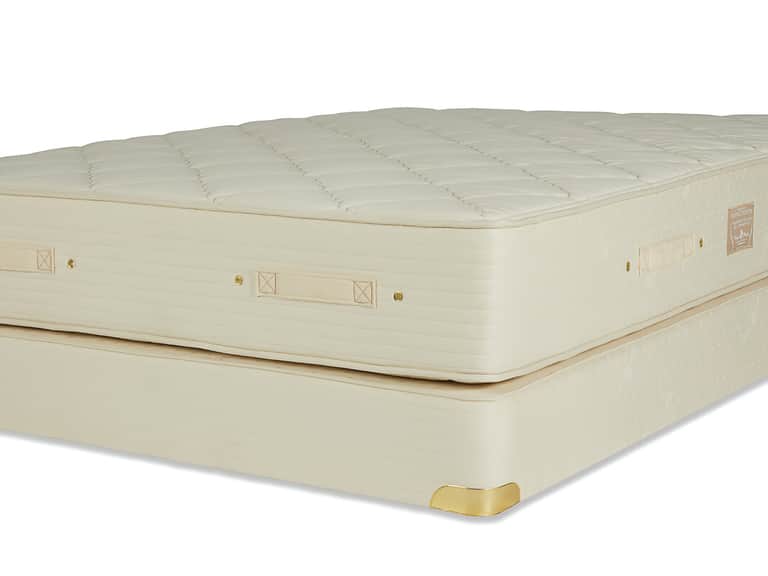
The Royal-Pedic Natural Latex Quilt-top Mattress with German Stretch Knit ticking embodies the marriage of natural materials and certified performance. It uses an all-natural Dunlop latex core, wool quilted into a French wool and cotton shell, and a fabric cover that emphasizes breathability and non-toxic construction. While the product itself may carry multiple certifications, the critical takeaway for shoppers is to verify which parts of the mattress are certified organic and to substantiate those claims with documentation.
In the broader landscape, this case study illustrates how a high-end mattress can deliver luxury without compromising on organic principles. The latex core, wool barrier, and natural cotton layers work together to create a sleep experience that prioritizes temperature regulation, hypoallergenic resilience, and chemical-free materials. Such a product can serve as a reference point when evaluating other offerings in the market, especially for those seeking a premium, certifiably organic sleep system.
Featured Product
Royal-Pedic Natural Latex Quilt-top Mattress
Core: All-natural Dunlop latex
Covering: Premium long-staple cotton, chemical-free wool, German stretch knit ticking
Notes: Flame retardant protection via wool, no chemical additives; suitable for adjustable bases.
Certification Perspective
While the product description highlights natural materials and safety features, consumers should seek explicit documentation regarding GOTS, GOLS, or other recognized labelling for each certified component. A mattress of this caliber often pairs high craftsmanship with organic content, and the verification trail is best traced to the textile shell and latex core separately.
Always request the certificates and verify chain-of-custody for each certified element to ensure the integrity of the organic story.
How This Knowledge Impacts Your UK Mattress Choices
For UK shoppers, organic certification takes on additional layers of local standards, import rules, and regional manufacturing practices. The UK market benefits from a robust ecosystem of textile certification bodies, green health guidelines, and consumer-right-to-know campaigns. When evaluating mattresses, UK consumers should:
- Look for clear statements about organic content and disclosure of the specific certified components.
- Cross-check certification numbers with the issuing body’s public registry.
- Consider the overall sleep system, including wool layers, organic cotton covers, and latex cores, and identify which elements bear independent certification.
- Be mindful of additional safety claims (flame retardants, glues, adhesives) and verify whether they are addressed by the certification or by separate product disclosures.
The journey toward an organic sleep environment is inherently multidisciplinary—touching material science, environmental science, and health. Certification serves as the map, but your own diligence completes the journey.
A Guided Roadmap for Readers: Your 3-Step Certification Check
- Identify the core materials in the mattress: latex, cotton, wool, springs. Determine which components carry GOTS or GOLS certifications.
- Obtain and review official certificates: confirm scope, validity dates, and the chain of custody.
- Assess the total product story: ensure multiple certified components or a comprehensive finished-product certification, and consider any non-certified elements in the overall health and environmental impact.
Glossary of Key Terms
A quick reference to terminology frequently encountered on mattress labels and in certification documents:
- GOTS: Global Organic Textile Standard, a leading standard for organic textiles across the supply chain.
- GOLS: Global Organic Latex Standard, focused on organic content and processing of latex used in bedding.
- Organic content: The proportion of a material that is certified organic, as defined by the standard in question.
- Chain of custody: Documentation proving that certified materials are tracked from source to finished product.
- Finished product certification vs. component certification: Coverage varies by whether the entire mattress or individual parts bear certification.
Conclusion: A Thoughtful Path to Organic Sleep
In the quiet hours of the night, a mattress that honors organic principles becomes more than a resting place—it becomes a statement about health, environment, and responsibility. By understanding GOTS and GOLS, and by applying a disciplined verification approach to every label, UK shoppers can navigate a market crowded with claims and open a path to sleep that is as clear as the dawn.
As the field of organic textiles continues to evolve, certification remains a reliable compass. The stories of scientists, advocates, and manufacturers converge in these marks, guiding consumers toward products that honor the earth and support human well-being. In this ongoing narrative, your informed choices become an active contribution to a more sustainable, healthier sleep future.