Organic mattresses · Materials guide
What to Look for in a Naturepedic Hybrid Mattress
A hybrid mattress is a layered landscape: springs provide structure beneath softer materials that cushion the body and shape the surface. When assessing a Naturepedic option, look beyond the word “hybrid”. The details that matter are the materials in each layer, the meaning and scope of any certifications, the feel that suits your sleeping position, and whether the mattress will work with your bed frame.
Published 5 November 2026
In a mattress showroom, a bed can look simple: a rectangle of fabric, a smooth top, a few stitched seams. Inside, however, different materials perform different tasks. Coils can support and respond to movement. Cotton can form a breathable quilt or cushioning layer. Wool may help regulate moisture and, in some designs, serve as a natural flame barrier. The word “hybrid” describes this mix of construction types; by itself, it does not tell you exactly what you will feel or what the mattress contains.
That distinction is useful when considering an organic hybrid mattress. A thoughtful comparison starts with the construction diagram or specification sheet, not a broad promise about comfort or natural materials. Check what is in the comfort layers, what surrounds the coil unit, which components are certified, and how the maker describes the mattress’s firmness and compatibility with different bases. These are practical questions, but they also reveal whether a product’s claims are specific enough to evaluate.
Start with the layer-by-layer construction
A hybrid commonly combines a spring system with one or more cushioning materials. Yet two mattresses carrying the same label can be built very differently. One might pair pocketed coils with latex; another might use coils and cotton or wool. Layer thickness, density, quilting and the way components are joined all influence the surface feel and how the bed responds when you move.
Ask for a clear account of the mattress from top to bottom. Useful details include the type of coil system, the materials directly above and below it, the thickness of each layer, and whether the comfort layers are stitched, quilted or bonded. If the information is vague, seek clarification rather than treating “natural”, “organic” or “hybrid” as a complete materials list.
- Comfort layers: Identify whether the surface uses cotton, wool, latex or another material, and how thick each layer is.
- Support system: Find out whether the coils are individually encased, connected, or described in another way. Construction affects how the mattress responds across the surface.
- Cover and quilting: Check the cover fabric and any materials quilted into it. The outer ticking is only one part of the mattress’s material story.
- Assembly: Ask whether adhesives or other bonding agents are used, if that information matters to your purchasing criteria.
- Total depth: Compare the mattress height with your existing bed, sheets and any headboard or frame requirements.
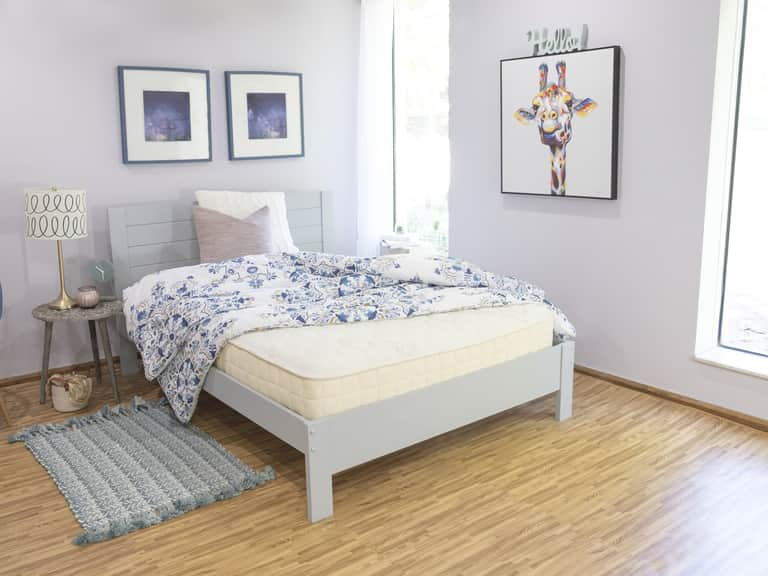
As one example of the kind of construction worth examining, the Naturepedic Verse Organic Cotton Kids Mattress is described as using encased coils with organic cotton filling and wool quilted into the cover. Its listed depth is nine inches. Those details provide a starting point for questions about comfort, certification scope and fit. Product specifications can change, so check the current manufacturer information for the exact model and size you are considering.
Understand what “organic” and “certified” mean
Organic is a useful term only when you can tell what it refers to. It may describe a particular fibre, a textile or a defined part of a product—not necessarily every component in a finished mattress. A mattress might contain certified organic cotton alongside coils and other materials that are assessed under different requirements. Read the scope carefully and look for documentation that identifies the certified material or product.
For textiles, the Global Organic Textile Standard (GOTS) is a certification shoppers may encounter. It sets requirements for organic fibres and processing within its defined scope. A reference to GOTS should prompt a specific question: which material or part of the product is certified, and can the certification be verified? A logo or broad marketing phrase alone may not make that clear. Check the certificate, its validity and the named product or supply-chain scope where those details are available.
Other standards may address different attributes. OEKO-TEX Standard 100, for example, concerns testing textile products for certain harmful substances; it is not the same claim as organic certification. A certification does not automatically answer every question about durability, environmental impact, emissions or comfort. Instead, each standard should be understood according to what it actually assesses.
When reviewing a Naturepedic model—or any organic mattress—look for the following:
- The full name of the certification and the organisation behind it.
- The materials, components or finished product covered by the certification.
- A certificate number or other way to verify the claim, where applicable.
- Clear distinctions between certified organic materials and other materials in the mattress.
- Up-to-date information for the exact model and size, rather than a general brand statement.
This careful reading is not scepticism for its own sake. It is a way to make comparisons fairly. If one product describes the cover, filling and coil unit separately while another provides only a general “organic” label, the first may simply be more transparent. The information available can be part of the decision, alongside comfort and price.
Match firmness to your body and sleeping position
Firmness is often presented as a single rating, but the experience of lying on a mattress is more personal than a number suggests. Body weight, shape, sleeping position and preferred cushioning all influence how a bed feels. A mattress that seems firm to one person may feel more yielding to another, because the body loads its materials differently.
Side sleepers often look for enough cushioning around the shoulders and hips to avoid a sharp pressure sensation, while maintaining support through the middle of the body. Back sleepers may prefer a surface that allows the lower back to settle without feeling unsupported. Stomach sleepers commonly need a surface that limits excessive sinking around the hips. These are general tendencies, not rules: comfort, health needs and individual anatomy vary.
Coils and comfort layers work together. A responsive spring unit can provide a buoyant feel, while the upper layers determine how much cushioning is immediately noticeable. Quilting may make the first impression softer, but the materials beneath it contribute to the overall feel. Ask the retailer or manufacturer how the model is rated and whether that rating applies across sizes. If possible, test the mattress under realistic conditions and allow enough time to assess whether your usual position feels comfortable.
For couples, consider differences in body weight, preferred sleeping positions and sensitivity to movement. Ask about motion transfer and edge support if these are priorities. A hybrid’s coil layout and comfort layers influence those qualities, but the label alone does not guarantee a particular result. Where in-person testing is not practical, examine the trial period, return terms and any collection fees before ordering.
Think about temperature and moisture
People often search for organic mattresses because they want to understand the materials around them and create a sleep environment that feels comfortable. Temperature is one part of that experience. A coil core can leave open spaces within a mattress, while the cover, quilting, sheets and room conditions all affect how warm the bed feels. No construction can promise a particular temperature for every sleeper.
Wool and cotton are commonly used in natural bedding. Their performance depends on construction and quantity as well as fibre type. A wool layer may help manage moisture and contribute to thermal comfort; cotton can provide a breathable textile surface. But a mattress is a system: a thick protector, tightly woven sheets or a warm duvet can change the feel of the sleep surface. Consider the whole bedding setup rather than expecting one material to solve overheating by itself.
If you are sensitive to odours, ask what materials are used and what to expect when the mattress is first unpacked. A mild material smell can be noticeable after packaging, but it should not be used as a shortcut for judging safety or certification. Follow the maker’s airing and care instructions, and seek product-specific information if you have a sensitivity or concern.
Check bed-frame and foundation compatibility
A well-made mattress still needs a suitable base. Before ordering, confirm whether the selected model can sit on your existing platform, slatted frame or foundation. Look for guidance on slat spacing, centre support, weight limits and any restrictions on adjustable bases. These details are especially important for a hybrid because the coil unit needs consistent support across the mattress.
Do not assume that every mattress works on every frame. Wide gaps between slats or a weak foundation can affect how evenly the mattress is supported. A frame that is too small, bowed or unstable may also compromise performance. Check the maker’s written instructions and warranty conditions; some warranties depend on the mattress being used with an approved support system.
Height matters too. Add together the mattress depth, foundation height and frame height to estimate the finished bed level. Consider whether the resulting height works with bedside tables, fitted sheets and ease of getting in and out of bed. If you use an adjustable base, confirm that the specific mattress is designed for it, rather than relying on a general statement about hybrids.
Review delivery, care and warranty terms
Buying a mattress involves more than choosing its materials. Delivery method can affect access to the room, especially in homes with narrow staircases or tight turns. Ask whether the mattress arrives flat or compressed, what setup is required, and how long it should rest before use. If the cover is not removable, find out how the manufacturer recommends cleaning it and whether a protector is advised.
Warranties usually address defined defects, not every change in feel over time. Read the terms to understand what counts as a covered fault, whether transport is included, and what kind of foundation is required. A trial period is separate from a warranty: one concerns whether you can return the mattress within stated conditions, while the other addresses qualifying problems over a longer period. Check both policies before purchase.
Durability is also difficult to reduce to a slogan. Material quality, layer design, use, care and support all play a part. Ask whether the maker offers guidance on rotating the mattress, and do not assume it can be flipped. Some designs have a defined top and base. Follow the instructions for the exact model, since incorrect handling may affect both comfort and warranty coverage.
A practical comparison checklist
When comparing a Naturepedic hybrid with another organic hybrid mattress, place the product specifications side by side. A simple checklist can make differences easier to see than a long list of promotional claims.
- Construction: What is in every layer, including the quilting and cover?
- Coils: What kind of spring unit is used, and how is it described by the manufacturer?
- Certifications: Which materials or components are certified, under which standard, and can the claim be checked?
- Feel: What firmness guidance is provided, and does it suit your preferred sleeping position?
- Dimensions: What is the exact depth, and will your sheets and frame fit?
- Support: Is your foundation approved, and are there slat or centre-support requirements?
- Care: What cleaning, rotation and protection instructions apply?
- Policies: What are the delivery, trial, return and warranty terms?
If a specification is missing, treat that as an unanswered question rather than filling in the blank with an assumption. Contact the manufacturer or retailer and request current, model-specific information. Keeping notes on the replies can help you compare products without being distracted by differences in brand language.
The point is fit, not a perfect label
An organic hybrid mattress brings together several decisions: which materials matter to you, how much cushioning feels comfortable, what support system fits your body, and whether the bed will work in your room. Certifications can clarify the status of certain materials, but they cannot tell you whether the mattress will feel right. Likewise, a comfortable first impression does not explain what lies inside or how the product’s claims are verified.
Approach a Naturepedic option with a calm, practical eye. Read the layer details. Trace certification claims to their scope. Consider your sleeping position and the bed frame already in your home. Then weigh delivery, care and return policies alongside comfort. The result is a more informed choice—one based not on a single word printed on a label, but on the construction and evidence behind it.